Post
Best Vetericyn Plus Antimicrobial Wound Spray 2026: Hospital-Grade Healing for Everyday Pet Injuries
May
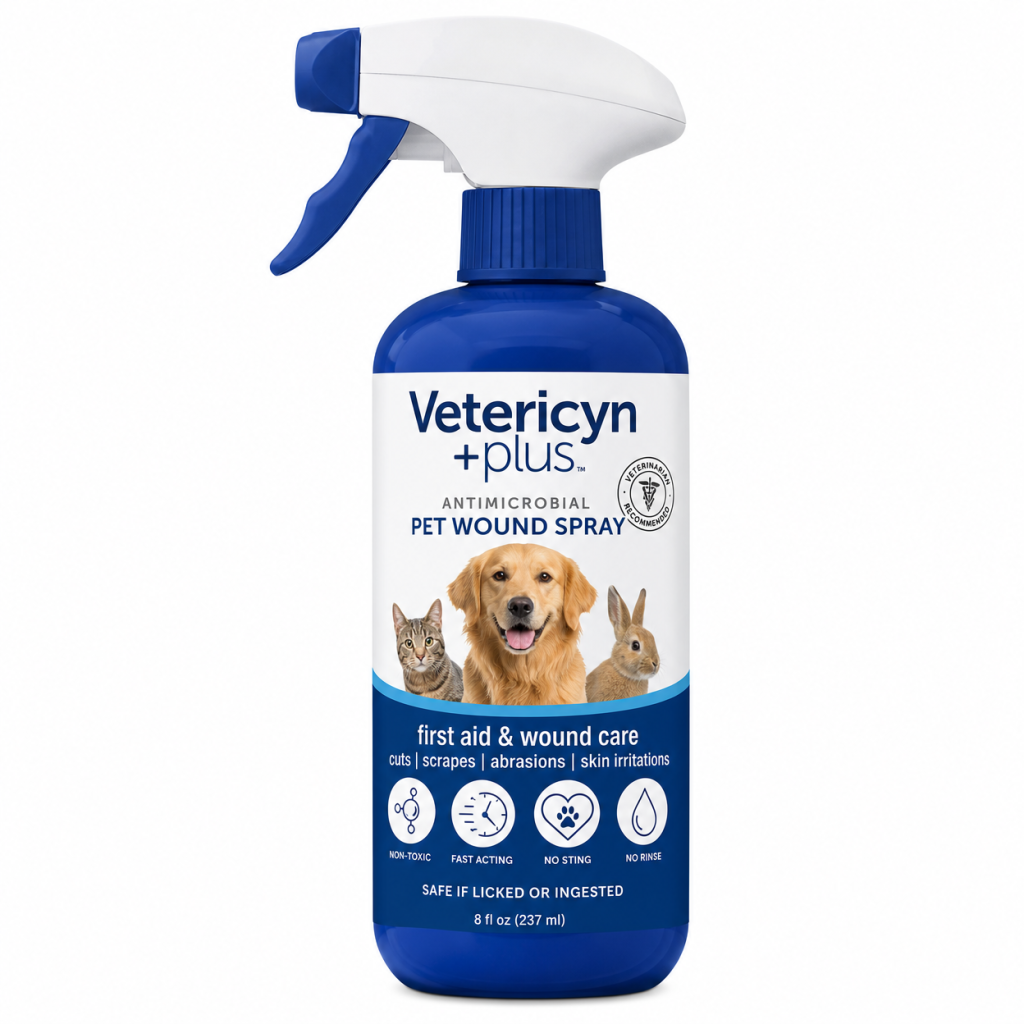
Vetericyn Plus Antimicrobial Wound Spray: Hospital-Grade Healing for Everyday Pet Injuries
Every dog and cat owner eventually faces the moment of discovering a wound, hot spot, irritated eye, or skin infection that requires immediate attention. The traditional response has been either an expensive and time-consuming veterinary visit for minor issues or the application of human-grade antiseptics like hydrogen peroxide or iodine that veterinary professionals actually recommend against for animal wound care because of their tissue-damaging properties. Vetericyn Plus Antimicrobial Pet Wound Spray provides a professional-grade alternative specifically formulated for animal wound care that is more effective, less damaging to healing tissue, and versatile enough to address a wide range of minor pet health situations. For the home pet first aid kit, Vetericyn Plus is as essential as bandages and tweezers.
The Hypochlorous Acid Technology
Vetericyn Plus is based on hypochlorous acid technology — an electrochemically activated solution that mimics the natural antimicrobial compound produced by white blood cells during infection response. Hypochlorous acid is one of the most effective naturally occurring antimicrobial agents known, capable of killing a broad spectrum of bacteria, viruses, fungi, and spores at very low concentrations, yet it is completely non-toxic to mammalian cells at the concentrations used therapeutically. Your pet’s own immune system produces hypochlorous acid to fight infection; Vetericyn Plus simply provides more of what the body already uses.
This non-toxicity to host cells is the critical advantage over conventional antiseptics. Hydrogen peroxide, alcohol, and povidone-iodine are all effective antimicrobials but they damage the tissue cells involved in wound healing — neutrophils, fibroblasts, and keratinocytes — which are the same cells that kill bacteria and create new skin. Applying these agents to wounds can slow healing even as they control infection. Vetericyn Plus kills pathogens without damaging healing tissue, allowing both infection control and wound repair to proceed simultaneously. Wounds heal faster and with less scarring when treated with hypochlorous acid.
The technology works through oxidation. Hypochlorous acid reacts with the cell walls of bacteria, viruses, and fungi, causing them to rupture. The reaction is rapid and thorough, killing 99.9% of pathogens within seconds of contact. However, mammalian cells have different cell wall compositions and are protected by the body’s natural antioxidant systems, so they are not damaged. This selectivity is what makes hypochlorous acid so valuable as a wound care agent — it kills the bad guys while leaving the good guys alone.
Vetericyn Plus is stable for 12 months after opening if stored properly. The solution is shelf-stable and does not require refrigeration. The spray bottle allows for no-touch application, reducing the risk of introducing new bacteria to the wound. The spray can be applied directly to wounds, hot spots, surgical incisions, and other skin conditions. The solution is clear and odorless, with no taste or smell that would bother your pet. There is no stinging or burning on application, so pets do not resist treatment.
Versatile Application Range
The spray formulation of Vetericyn Plus makes it applicable to a remarkably wide range of pet health situations that go beyond simple wound care. Hot spots — the acute, moist dermatitis lesions that affect dogs and cause intense scratching, licking, and self-trauma — respond well to Vetericyn Plus application that controls the secondary bacterial infection while soothing the inflamed tissue. Spray the hot spot 2-3 times daily; within 2-3 days, the hot spot should begin to dry and heal. The spray does not sting, so the dog does not associate treatment with pain.
Ear infections, both bacterial and yeast-related, can be treated with the ophthalmic-grade version specifically formulated for ear and eye application. The regular Vetericyn Plus should not be used in eyes; use the Vetericyn Plus Ophthalmic Gel for eye issues. For ear infections, apply several drops into the ear canal daily. The solution will help clear infection while soothing inflammation. For chronic ear issues, Vetericyn Plus can be used as a maintenance cleaner after the acute infection resolves. Always consult your veterinarian for proper diagnosis before treating ear infections at home.
Post-surgical incision care benefits from the antimicrobial protection Vetericyn Plus provides without the tissue-damaging effects of traditional antiseptics. Spray the incision once or twice daily after cleaning. Vetericyn Plus will keep the incision clean while allowing the tissue to heal. Many veterinarians now recommend hypochlorous acid sprays for post-surgical care because they do not delay healing. Check with your veterinarian before using any product on a surgical incision; some surgeons prefer specific protocols.
Skin conditions including pyoderma, ringworm, and other fungal or bacterial skin infections respond to regular Vetericyn Plus application that maintains antimicrobial pressure on the causative organisms while avoiding the systemic side effects associated with oral medication for less severe cases. For localized skin infections, spraying 2-3 times daily for 7-10 days often resolves the issue. For widespread infections, veterinary consultation is still necessary, but Vetericyn Plus can be used as an adjunct to systemic treatment.
Paw pad injuries, interdigital cysts, and the perennial problem of lick granulomas all benefit from the combined antimicrobial and healing-supportive properties of the spray. For paw injuries, soak the paw in a bowl of Vetericyn Plus or spray generously and allow to air dry. The solution will not sting, even on raw, exposed tissue. For lick granulomas (sores caused by excessive licking), the antimicrobial action helps control infection while you address the underlying behavioral cause of the licking. The spray alone will not stop the licking; you need to address the anxiety or boredom that causes it.
Application and Dosing Approach
Vetericyn Plus is applied directly to the affected area and left in place without rinsing — the spray dries to a thin, flexible film that maintains its antimicrobial activity at the wound site over time without requiring repeated applications throughout the day. Two to three applications daily is typically recommended for acute wounds during the active infection or healing phase, transitioning to once daily as the condition improves. The non-stinging formulation is well-tolerated by most pets, though some initial licking behavior is normal and the product is safe for ingestion at the amounts involved in normal grooming behavior.
For wounds, first clean the area with saline or water to remove visible debris. Then spray Vetericyn Plus generously over the entire wound and the surrounding skin. The solution will run into all the crevices, reaching areas that wiping might miss. Allow the wound to air dry or pat gently with a sterile gauze. Do not rinse. Apply 2-3 times daily until the wound appears to be healing well, then reduce to once daily until fully healed. For most minor wounds, 5-7 days of treatment is sufficient.
For hot spots, trim the hair around the area if possible to allow the spray to reach the skin. Spray generously and allow to air dry. The spray will cool and soothe the inflamed skin. Apply 2-3 times daily. The hot spot should begin to dry and scab within 2-3 days. Continue treatment until the scab falls off and healthy skin is visible underneath. If the hot spot worsens or spreads despite treatment, see your veterinarian; it may be caused by an underlying allergy or other condition that requires systemic treatment.
For post-surgical incisions, follow your veterinarian’s instructions regarding when to start using Vetericyn Plus. Some surgeons prefer incisions to remain dry for the first 24-48 hours. Once allowed, spray the incision line once daily or as directed. The spray will keep the incision clean and may reduce the risk of infection. Do not spray directly into an open wound if the incision is still draining; spray around the area instead. If you notice redness, swelling, discharge, or other signs of infection, contact your veterinarian immediately.
Veterinary and Professional Use
Vetericyn Plus is used extensively in veterinary practices, animal shelters, and professional grooming facilities where its combination of efficacy, safety, and versatility make it a practical standard of care for wound management. This professional adoption reflects the technology’s genuine performance advantages over conventional antiseptics and provides validation of its effectiveness that consumer testimonials alone cannot achieve. Veterinarians who use Vetericyn in their practices frequently recommend it to clients for home wound care management, which provides an important professional endorsement pathway for a product addressing situations that owners often manage independently.
Many veterinary teaching hospitals have adopted hypochlorous acid products for wound care based on published research demonstrating faster healing times and lower infection rates compared to traditional antiseptics. The research base for hypochlorous acid is strong, with studies in both human and veterinary medicine supporting its use. This is not a fringe or alternative product; it is mainstream, evidence-based wound care.
Animal shelters use Vetericyn Plus to manage the inevitable scrapes, scratches, and minor wounds that occur in group housing environments. The spray is cost-effective compared to veterinary visits for every minor injury, and the non-toxic formulation means it can be used around food and water without concern. Shelters also use Vetericyn Plus for ringworm management, as the antifungal properties help control this common shelter infection.
Professional groomers use Vetericyn Plus to treat minor nicks and cuts (clipper burns, accidental nicks) that occur during grooming. The spray provides immediate antimicrobial protection and soothes the irritated skin. Groomers also use it to treat skin fold dermatitis in breeds like Bulldogs and Shar-Peis, spraying the affected areas to control moisture and infection. Having Vetericyn Plus in the grooming kit allows groomers to provide immediate care for minor injuries before the pet goes home.
When Professional Veterinary Care Is Still Necessary
Vetericyn Plus is an excellent tool for minor wound care and first aid, but it is not a replacement for professional veterinary evaluation of serious wounds, deep puncture injuries, wounds with significant tissue damage or contamination, infections that have not improved within five to seven days of treatment, or any situation where the pet shows signs of systemic illness such as fever, lethargy, or loss of appetite. These situations require professional diagnosis and potentially systemic treatment that topical wound care cannot provide. Vetericyn Plus treats the surface; systemic infections require systemic medication.
Deep puncture wounds — from bites, stepping on nails, or other penetrating injuries — require veterinary attention regardless of how clean the surface appears. Puncture wounds often seal over at the surface while trapping bacteria deep in the tissue, leading to abscesses. Your veterinarian may need to flush the wound thoroughly and prescribe systemic antibiotics. Do not rely on topical treatment alone for puncture wounds.
Wounds that involve significant tissue loss or that will not stop bleeding require veterinary attention. If you cannot control bleeding with direct pressure, seek emergency veterinary care. Similarly, if a wound gapes open, it may require sutures to heal properly. Vetericyn Plus can be used on sutured wounds, but the wound itself needs professional closure first.
If your pet shows signs of systemic illness — fever, lethargy, loss of appetite, vomiting, diarrhea — do not rely on topical treatment. Systemic illness indicates that the infection has spread beyond the local wound site and requires systemic antibiotics. See your veterinarian promptly. Delaying treatment for systemic illness can have serious consequences.
Final Verdict
The Vetericyn Plus Antimicrobial Pet Wound Spray is an essential addition to every pet owner’s home first aid kit, providing veterinary-grade wound care capability based on sophisticated hypochlorous acid technology that is simultaneously more effective against pathogens and safer for healing tissue than conventional antiseptics. Its broad applicability across wound care, hot spots, skin infections, ear care, and surgical site management makes it a genuinely versatile product that earns its place in both household medicine cabinets and professional veterinary settings. Every pet owner should have a bottle of Vetericyn Plus on hand before they need it. When that minor cut or scrape happens, you will be ready.
