Post
Best TheraPet Orthopedic Memory Foam Dog Bed 2026: Because Your Dog’s Rest Is Worth Investing In
May
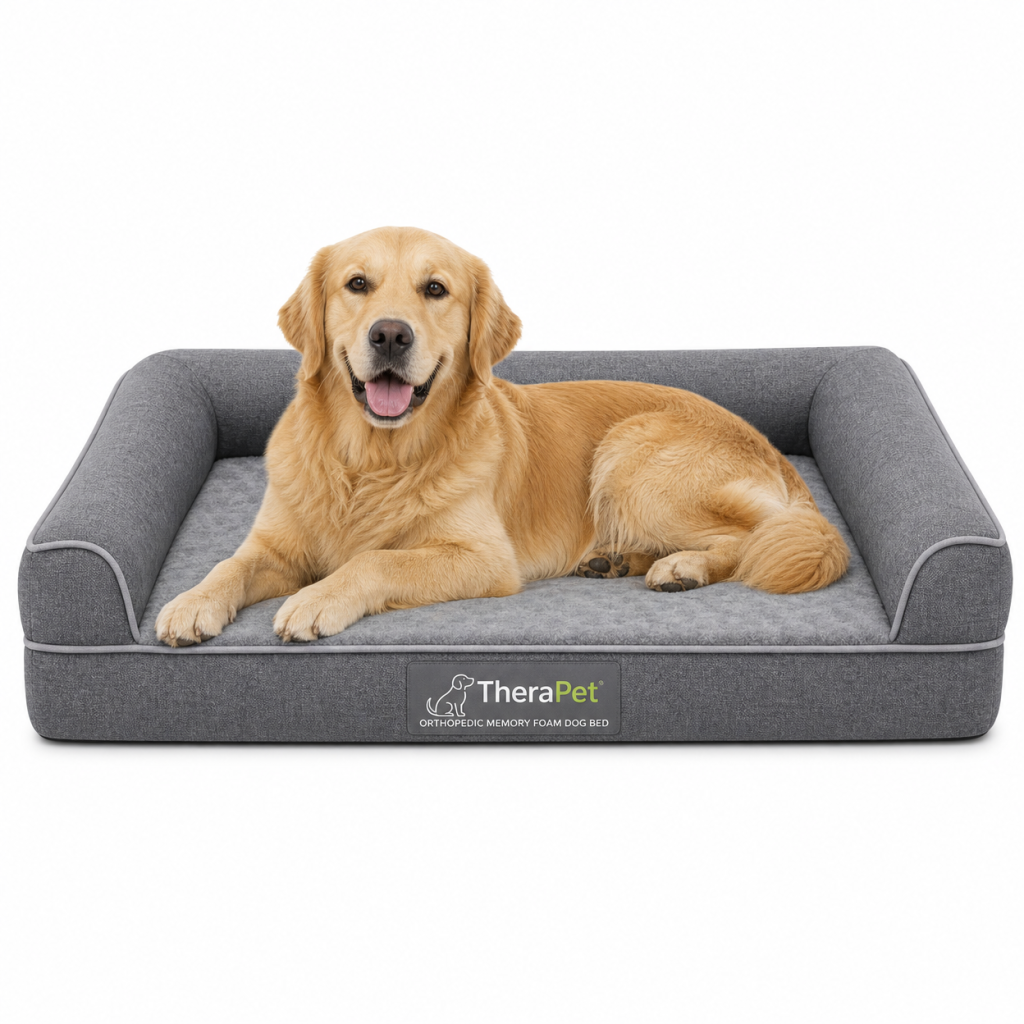
TheraPet Orthopedic Memory Foam Dog Bed: Because Your Dog’s Rest Is Worth Investing In
Dogs spend anywhere from twelve to sixteen hours per day sleeping or resting, and the surface they rest on during those hours has a direct impact on their musculoskeletal comfort, joint health, and the quality of recovery they achieve between active periods. For dogs with existing joint conditions including hip dysplasia, arthritis, and cruciate ligament injuries, rest surface quality moves from a comfort consideration to a therapeutic necessity. The TheraPet Orthopedic Memory Foam Dog Bed addresses this with temperature-sensitive memory foam construction that adapts to each dog’s unique body contour, providing the joint-specific pressure relief and supportive comfort that conventional pet beds with flat or fiberfill padding cannot achieve. For dogs who deserve the best rest possible, TheraPet delivers.
Memory Foam Technology for Dogs
Memory foam — technically viscoelastic polyurethane foam — responds to body heat and pressure by gradually conforming to the shape of the body surface pressing against it, distributing the body’s weight across a larger surface area than conventional foam allows. This weight distribution directly reduces the concentrated pressure at bony prominences — hips, shoulders, elbows, and knees — that cause the discomfort and callus formation associated with hard surface sleeping in dogs with low body fat or thin coats. A dog lying on a memory foam bed has their weight spread evenly, with no single pressure point bearing the full load.
For dogs with arthritis or hip dysplasia, this pressure reduction at inflamed joints translates directly into reduced pain during and after rest periods, which influences the dog’s willingness to rest adequately and the quality of recovery from physical activity. Dogs that wake from rest on comfortable, supportive surfaces move more freely and with less initial stiffness than dogs that rest on surfaces that fail to relieve joint pressure, which is a meaningful quality-of-life difference for dogs managing chronic joint conditions. The difference between a dog who limps after rising and a dog who bounds up is often the bed they sleep on.
The memory foam also reduces motion transfer. When a dog shifts positions during sleep, the foam absorbs the movement rather than transferring it to the rest of the bed. This means the dog is less likely to wake themselves up with their own movements, leading to more restful, continuous sleep. Better sleep quality contributes to better overall health, just as it does in humans. A dog who sleeps well is a dog who heals well and behaves well.
Memory foam is also supportive. Unlike fiberfill beds that flatten over time, memory foam returns to its original shape after each use. A fiberfill bed may provide comfort for a few months before becoming flat and useless; a memory foam bed provides consistent support for years. The initial investment in memory foam pays off in longevity. TheraPet beds are designed to last for the lifetime of your dog, not just a season.
Foam Density and Its Importance
The quality of memory foam products is heavily influenced by foam density, measured in pounds per cubic foot (PCF). Low-density foams — below 3 PCF — feel soft initially but bottom out under body weight, with the dog eventually resting on the compressed foam floor rather than on the cushioned surface. High-density foams — 4 PCF and above — maintain their structure under body weight, providing genuine lift and pressure distribution rather than simply allowing the dog to sink through to a hard surface. TheraPet uses foam density appropriate for its intended therapeutic application, ensuring that the memory foam layer provides genuine orthopedic benefit rather than the superficial cushioning of low-density foam that wears through quickly.
The base foam layer (the support core) is also important. TheraPet beds use a high-density polyurethane foam base beneath the memory foam layer. This base provides the structural support that prevents the dog from sinking all the way to the floor. The combination of a supportive base and a conforming top layer is what makes memory foam beds superior to single-layer foam beds. The base supports; the memory foam conforms.
Foam density is not the same as firmness. A high-density foam can be soft or firm; density refers to the amount of foam material per cubic foot, not how hard it feels. Higher density foam is more durable because there is more material to compress and recover. Low-density foam has more air space, so it collapses more quickly. TheraPet uses high-density foam for durability, not just for feel.
Over time, all foam will soften to some degree. High-quality foam softens gradually over years; low-quality foam softens rapidly over months. TheraPet’s foam is tested for compression set (the amount of permanent deformation after repeated use). Low compression set means the foam returns to its original shape after each use. TheraPet’s foam has excellent compression set ratings, meaning the bed will maintain its shape and support for years.
Cover Design and Washability
The cover of the TheraPet bed is removable and machine washable — an essential feature for any dog bed that will receive daily use and accumulate the fur, dander, skin oils, and general evidence of canine life that pet bedding accumulates rapidly. The zipper closure allows complete cover removal for thorough washing, and the cover fabric is selected for durability through regular washing cycles without pilling, shrinking, or structural degradation. A bed that cannot be washed is a bed that becomes unhygienic quickly; TheraPet beds are designed for easy cleaning.
The cover also plays a role in the bed’s actual thermal performance — breathable cover fabrics prevent heat accumulation that can make memory foam beds uncomfortable for thick-coated breeds in warm environments, while insulating covers enhance warmth retention for thin-coated breeds in cooler climates. Selecting an appropriate cover material for the dog’s coat type and the household’s climate is a worthwhile consideration in evaluating orthopedic bed options. TheraPet offers different cover options for different needs, including a cooling cover for hot climates and a sherpa cover for cold climates.
The cover is also water-resistant to some extent, protecting the foam core from accidents or spills. The water resistance is not waterproof, but it gives you time to clean up a mess before it soaks into the foam. For dogs who are incontinent or prone to accidents, a waterproof liner placed between the cover and the foam provides additional protection. TheraPet sells waterproof liners separately.
The zipper is heavy-duty and recessed to prevent your dog from chewing it. A exposed zipper can be tempting for a dog to chew, and a chewed zipper can ruin the cover. The TheraPet cover’s zipper is hidden under a fabric flap, making it inaccessible to curious mouths. The zipper is also self-repairing to some extent; if it jams, you can often work it free without breaking the zipper.
Sizing for Large Breed Dogs
Orthopedic beds for large breeds require substantially more foam volume than small dog versions to provide equivalent pressure relief across the larger surface area and greater body weight involved. The TheraPet bed is available in sizes appropriate for large and giant breeds where orthopedic support needs are typically greatest — Great Danes, German Shepherds, Labrador Retrievers, Rottweilers, and similar breeds that are disproportionately affected by joint conditions compared to smaller breeds. A small dog bed scaled up is not the same as a bed designed for large breeds; TheraPet beds are engineered specifically for large dogs.
Large dogs that sleep stretched out full-length require beds long enough to support the entire body without legs and paws hanging over the edge — a position that creates the joint stress that the orthopedic bed is intended to relieve. Measuring the dog stretched out and selecting a bed size that accommodates this position fully is important for achieving the product’s therapeutic intent. A bed that is too short forces the dog to curl up, which may not be their preferred sleeping position. Measure your dog from nose to tail tip when stretched out, and add 6-12 inches to that measurement for the ideal bed length.
The bed thickness also matters. Thicker beds provide more cushioning and support. For large and giant breeds, a minimum thickness of 4-6 inches is recommended. TheraPet beds in large sizes are appropriately thick. A thin mattress (2-3 inches) will bottom out under a large dog, providing no orthopedic benefit. The thickness of the bed is especially important for dogs with bony prominences (elbows, hips) that need extra cushioning.
For senior dogs, consider a bed with a low entry height. Some TheraPet models feature a lowered front edge that makes it easier for arthritic dogs to step onto the bed. A standard bed with a 4-inch side can be challenging for a dog with hip dysplasia to step over. The low-entry design reduces the need to lift the hind legs, making bed access easier and safer. If your dog struggles to get onto furniture or into the car, a low-entry bed is likely the right choice.
Transition from Old Bed
Dogs are creatures of habit and may initially resist a new sleeping surface despite its superior comfort. Placing the new bed in the location where the old bed was, adding a familiar blanket or item with the dog’s scent, and encouraging initial use through treats and positive reinforcement helps establish the new bed as the preferred resting location quickly. Most dogs adapt to their orthopedic bed within a few days once they experience the comfort difference and associate the new location with rest. Be patient; do not force the dog to use the bed.
If your dog continues to avoid the new bed, try placing treats on the bed to create positive associations. Feed your dog their meals on the bed. Play with your dog on the bed. Make the bed a happy place, not just a place to sleep. Once the dog has positive associations, they will begin using the bed voluntarily. Some dogs need a few weeks to fully transition; this is normal.
Keep the old bed available during the transition period. Removing the old bed immediately can cause anxiety and resistance. Place the new bed next to the old bed, and let the dog choose. Over time, move the old bed further away, then remove it. The dog will likely choose the more comfortable new bed once they have tried it. If the dog still prefers the old bed after two weeks, examine why. Is the new bed too warm? Too cold? In a drafty location? Adjust placement or cover as needed.
Once the dog is using the new bed, maintain it properly. Wash the cover regularly. Fluff the foam by picking up the bed and shaking it occasionally. Rotate the bed if your dog always sleeps in the same spot, to even out wear. With proper care, a TheraPet bed will provide years of comfortable, supportive rest.
Final Verdict
The TheraPet Orthopedic Memory Foam Dog Bed is a genuine therapeutic investment for dogs with joint conditions, senior dogs whose joint health requires careful management, and any dog owner who wants to provide their pet with the quality of rest surface that their twelve to sixteen daily hours of resting deserves. Memory foam’s pressure-distributing properties provide objectively superior joint support compared to conventional pet bedding, and the long-term benefits for joint health and comfort quality make this investment in rest surface quality one of the most impactful quality-of-life improvements available for dogs that spend the majority of each day in contact with their sleeping surface. Your dog gave you unconditional love; give them the gift of pain-free rest.
