Post
Perfect Outward Hound Fun Feeder Slow Bowl 2026: Turning Mealtime Into Beneficial Mental Work
May
Outward Hound Fun Feeder Slow Bowl: Turning Mealtime Into Beneficial Mental Work
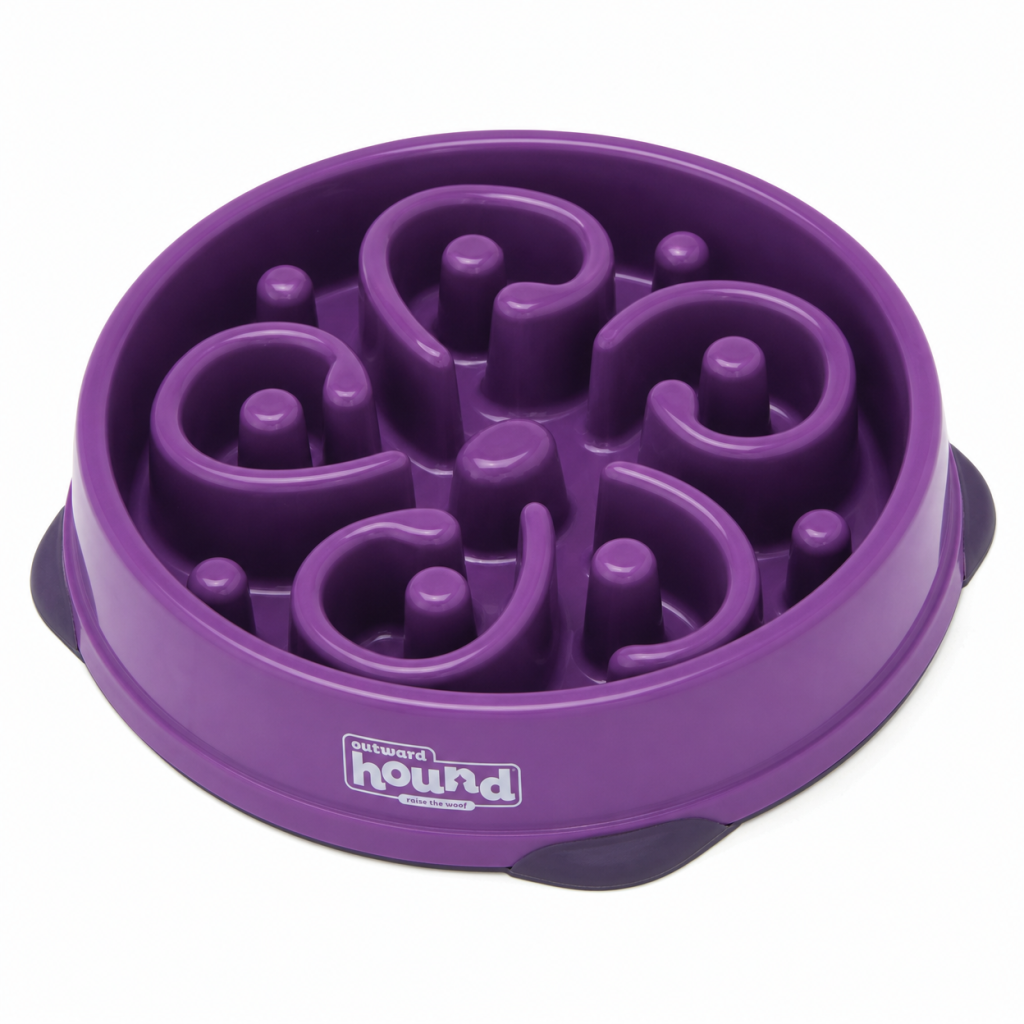
For dogs that consume their meals with alarming speed, every feeding is a potential health risk and a missed opportunity for the kind of sustained mental engagement that well-designed mealtime can provide. The Outward Hound Fun Feeder Slow Bowl addresses both of these issues simultaneously with a ridged maze design that forces dogs to slow their eating significantly while providing a problem-solving challenge that engages the cognitive faculties that rapid bowl eating completely bypasses.
The result is a feeding experience that is safer, more enriching, and more satisfying than standard bowl feeding for most dogs. A dog who eats from a Fun Feeder is not just eating; they are working for their food, which is what their brain evolved to do.
The Health Case for Slow Feeding
Rapid eating is associated with several health risks in dogs that make intervention through slow feeding genuinely important rather than merely convenient. Gastric Dilatation-Volvulus (GDV), commonly called bloat, is a life-threatening condition that occurs most frequently in large and deep-chested breeds that eat rapidly, exercise shortly after eating, or swallow large amounts of air during meals.
While slow feeding does not eliminate GDV risk, it meaningfully reduces two of the primary contributing factors — rapid eating and excessive air swallowing — making the Fun Feeder a genuine health management tool for high-risk breeds. For owners of Great Danes, German Shepherds, Standard Poodles, and other at-risk breeds, a slow feeder is not optional; it is essential.
Beyond the serious risk of bloat, rapid eating commonly causes vomiting and regurgitation in dogs whose stomach contents reappear within minutes of eating, a frustrating and unhygienic cycle that slow feeding reliably interrupts. Dogs that eat slowly and chew their food more thoroughly also absorb a greater percentage of the nutrients in their kibble, potentially allowing for more efficient nutrition from the same food quantity.
A dog who vomits after meals is not only unpleasant to live with but may also be missing out on essential nutrition, leading to weight loss or deficiencies over time.
Rapid eating can also cause behavioral issues. Dogs who eat too quickly may become food-aggressive, guarding their bowl because they feel the food will be gone soon. By extending mealtime, slow feeding reduces the sense of urgency that contributes to resource guarding. The dog learns that food will be available for an extended period, and there is no need to defend it frantically. For multi-dog households, slow feeding can reduce competition-related aggression by making mealtime a longer, less frantic experience.
Additionally, slow feeding provides dental benefits. When a dog eats from a standard bowl, they often swallow kibble whole with minimal chewing. When forced to navigate the maze of a slow feeder, the dog must pick up smaller amounts of kibble and often chews more thoroughly. This increased chewing action helps clean teeth and massage gums, contributing to better oral health. While not a substitute for brushing, the Fun Feeder provides more dental benefit than a standard bowl.
The Maze Design and Its Effectiveness
The Fun Feeder’s distinctive ridged maze pattern creates a physical barrier between the dog and its food that requires the dog to navigate its muzzle around the ridges to access kibble piece by piece, effectively extending meal time from a typical fifteen to sixty seconds to five to ten minutes or more depending on the maze configuration chosen and the dog’s individual problem-solving approach.
This dramatic extension of mealtime duration provides time for the satiety hormones that signal fullness to reach the brain during the meal rather than after it — one reason that dogs fed from slow feeders often appear more satisfied after eating than those fed from standard bowls despite consuming identical quantities. The dog’s brain has time to register that they are full before the food is gone.
The maze design varies by model. Some Fun Feeders have a spiral pattern, others have a bone-shaped pattern, and others have a more complex interlocking pattern. The pattern affects the slowing effect; more complex patterns slow eating more effectively but may be frustrating for some dogs. If your dog is highly food-motivated, start with a moderately complex pattern. If your dog is a less enthusiastic eater, a simpler pattern may be more appropriate. You can always upgrade to a more complex bowl later.
The ridges are of different heights and shapes, creating pockets where kibble can hide. The dog must use their tongue and muzzle to extract the kibble from these pockets, which requires more dexterity than simply vacuuming food from a flat surface. This extraction process is itself enriching, turning eating into a puzzle-solving activity. The dog must figure out the most efficient way to access the food, engaging their problem-solving skills. Over time, dogs develop strategies for working the maze, and watching them solve the puzzle is entertaining for owners as well.
The Fun Feeder is most effective with kibble of standard size and shape. Very small kibble may fall too easily between the ridges, reducing the slowing effect. Very large kibble may not fit into the pockets at all. If your dog’s kibble is not working well with the Fun Feeder, you can try a different model with larger or smaller ridges, or switch to a different kibble brand. Wet food can be used but will fill the pockets and be difficult to clean; the Fun Feeder is really designed for dry kibble.
Multiple Maze Configurations
Outward Hound offers the Fun Feeder in several maze designs of varying complexity, from the relatively open maze patterns in the Blue Ridge Flower design to the more intricate Swirl and Diamonds patterns that provide greater slowing effect and more mental challenge.
Selecting a maze complexity appropriate to the dog’s current eating speed and motivation level is recommended — a very motivated fast eater may navigate a simple maze too quickly to achieve significant slowing, while a less food-motivated dog may become frustrated with a very complex maze and lose interest in eating altogether.
You can also use the Fun Feeder as a training tool, starting with a simpler maze and progressing to more complex ones as your dog becomes more skilled at extracting food.
The Fun Feeder Maze (the original design) features a spiral pattern that is moderately challenging. This is a good starting point for most dogs.
The Fun Feeder Twist has a more complex interlocking pattern that is more effective at slowing fast eaters. The Fun Feeder Lick mat is a different product entirely, designed for wet food and treats, not for kibble. The Fun Feeder Slow Feeder Dog Bowl (various patterns) includes bone-shaped, diamond, and wave patterns that provide different levels of difficulty.
For small dogs with small mouths, the Mini Fun Feeder has smaller ridges and pockets that are appropriately sized. Using a standard Fun Feeder with a small dog can be frustrating, as the dog’s muzzle may not fit into the pockets to extract food. For large dogs with large mouths, the large Fun Feeder provides appropriately sized pockets.
Using a Mini Fun Feeder with a large dog would be pointless, as the dog could simply eat around the ridges. Always choose the size that matches your dog’s physical dimensions.
For owners with multiple dogs, having different maze patterns can help with individual needs. A fast eater gets the complex pattern; a slow eater gets the simple pattern. The bowls are stackable for storage and are all dishwasher safe. The different colors also help you remember which bowl belongs to which dog. Some owners label the bowls with the dog’s name to avoid confusion.
Non-Slip Base Design
The Fun Feeder bowl includes a non-slip base that prevents the bowl from sliding across smooth floor surfaces during the determined shoving and pushing that dogs apply when trying to navigate food out of the maze recesses. Without this non-slip feature, the bowl would migrate across the floor during feeding, creating a frustrating experience for the dog and a potential mess management issue for the owner.
The base design effectively anchors the bowl in place during normal feeding activity. The non-slip material is a soft rubber that grips most surfaces, including tile, wood, and concrete.
The non-slip base is bonded to the bottom of the bowl and is not removable. It can be cleaned with a damp cloth. Over time, the non-slip material may wear smooth, reducing its effectiveness. When this happens, you can replace the bowl or apply stick-on non-slip pads to the bottom. However, most owners find that the original non-slip base lasts for years before showing significant wear. The base also protects the floor surface from scratches, as the rubber is softer than the plastic bowl material.
For dogs who pick up their bowls and carry them, the non-slip base may not be sufficient. If your dog is a bowl-carrier, you may need to use a bowl stand or place the Fun Feeder in a holder that prevents lifting. The non-slip base prevents sliding but does not prevent lifting. A determined dog can still pick up the bowl by the rim. If this is an issue, consider using a bowl that attaches to a stand or placing the bowl in a heavy ceramic outer container.
For outdoor feeding, the non-slip base works on concrete and decking but may be less effective on grass or dirt. If you feed your dog outdoors, the Fun Feeder may slide more easily, or the maze may become clogged with dirt. It is best to use the Fun Feeder indoors on a hard, clean surface. The bowl can be taken outside for picnics or travel, but be prepared for potential sliding on uneven surfaces.
Size Options and Food Types
The Fun Feeder is available in multiple sizes with maze channel depths and widths calibrated for different muzzle sizes and kibble types. Choosing the correct size ensures that the dog’s muzzle can access the maze channels without difficulty while the maze channels are narrow enough to provide genuine slowing effect.
Wet food users should note that the maze design is most effective with dry kibble — wet food can be used but the maze channels require more thorough cleaning after each use and the slowing effect is reduced because wet food fills the channels rather than settling in pockets.
The Mini Fun Feeder is designed for dogs under 20 pounds, including toy breeds and small terriers. The ridges are lower and the channels are narrower, suitable for small mouths. The standard Fun Feeder is for dogs 20-50 pounds, including Beagles, Cocker Spaniels, and smaller mixed breeds. The Large Fun Feeder is for dogs 50-100 pounds, including Labradors, Goldens, and German Shepherds. The Extra Large Fun Feeder is for giant breeds over 100 pounds, including Great Danes, Mastiffs, and St. Bernards.
For raw-fed dogs, the Fun Feeder can be used with ground raw food but not with chunks or whole pieces. The maze channels may become clogged with meat fibers, requiring thorough cleaning. Many raw feeders use the Fun Feeder Lick Mat instead, which is designed specifically for wet and raw foods. The Lick Mat has a different texture — small bumps and ridges rather than maze channels — and is made from a softer material that is easier to clean.
For dogs on a prescription diet, the Fun Feeder works with any dry kibble, regardless of brand or formulation. Check with your veterinarian if your dog has specific feeding requirements, such as needing to eat slowly for medical reasons. For dogs with dental issues or missing teeth, the Fun Feeder may be too challenging; consult your veterinarian before using. The goal is to slow eating without causing frustration or preventing the dog from eating enough to maintain weight.
Cleaning Considerations
The maze channels of the Fun Feeder collect food debris, oils, and moisture that require regular thorough cleaning. The bowl is dishwasher safe on the top rack, which is the most effective cleaning method for removing accumulated debris from the ridges and channels.
Hand washing with a brush appropriate for the maze channel dimensions is the alternative for bowls not suitable for dishwasher cleaning or when immediate cleaning after use is preferred. A small bottle brush or toothbrush works well for reaching into the maze channels.
If hand washing, use warm water and mild dish soap. Soak the bowl for a few minutes to loosen dried food, then scrub each channel with a brush. Rinse thoroughly to remove all soap residue; any remaining soap can affect the taste of the next meal and may cause digestive upset. Dry the bowl completely before the next use to prevent moisture from causing food to stick. The bowl can be air-dried on a dish rack or wiped with a clean towel.
Over time, the maze channels may develop stains or odors that regular washing does not remove. A soak in a solution of warm water and white vinegar (1 part vinegar to 3 parts water) for 30 minutes, followed by a thorough wash, usually eliminates odors and light stains. For stubborn stains, a paste of baking soda and water applied to the stained areas and left for 15 minutes before washing can help. Do not use bleach or harsh chemicals, as they can damage the plastic and leave residues.
If the bowl becomes cracked or develops sharp edges, replace it immediately. Cracks can harbor bacteria and sharp edges can cut your dog’s mouth. The plastic is durable but not indestructible; dropping the bowl or exposing it to extreme temperatures can cause cracking. With proper care, a Fun Feeder should last for years. Many owners use the same Fun Feeder for the life of their dog, only replacing it if the dog’s size or feeding needs change.
Final Verdict
The Outward Hound Fun Feeder Slow Bowl is a practical, effective, and affordable intervention for the significant proportion of dogs that eat too quickly for their health and wellbeing. Its maze design reliably extends mealtime, reduces bloat risk, prevents regurgitation, and provides meaningful cognitive engagement that turns a brief feeding event into a satisfying enrichment activity.
For owners of large breeds, fast eaters, or dogs that vomit after meals, the Fun Feeder represents one of the highest-impact, lowest-cost improvements available for their dog’s feeding routine. It turns mealtime from a race into a puzzle, and your dog will be healthier and happier for it.
